

Technology
From Weeks to Hours: Building a Faster Marketing Site with Agentic Workflows


A marketing site is supposed to be the front door of a company. In some teams it’s also the slowest thing they own. Every new page, every campaign, every positioning shift gets trapped between content, design, development, SEO, and deployment, and weeks pass before anything ships.
So we rebuilt ours, agentically. In the past few weeks we moved our roughly 30-page site to a new workflow, migrated 60 blog posts with it, shipped 5 entirely new pages, refactored our navigation, dropped CMS and hosting fees, and gave every person on the team, not just engineers, the ability to ship a content update in hours and a full new page in days.
The shift isn’t about changing the stack. It’s that marketing can now publish, test, and improve content without waiting on engineering for every update. Here’s how we got there.
Built for 2014
We used to run our marketing site like most teams still do. Marketing wants to ship a page for a new service, a new campaign, or a sharper positioning angle, and writes the content. Design reviews drafts. A developer rebuilds the page inside the no-code tool. Marketing and design review again. After revisions, we ship.
A cycle like this took weeks, even with an in-house team and no agency in the mix, even with best practices already in place for branding, positioning, and SEO. The bottleneck wasn’t effort or talent. It was structural. Every change had to pass through too many hands, and the people closest to the message were the furthest from the ship button.
The first agentic experiments
With the rise of AI agents, we noticed a pattern. Marketing could generate a page draft much faster than before, but they came with predictable problems:
- Brand inconsistency. The design system drifted across prompts, and a marketing site that’s supposed to look like one company started looking like four.
- Lost traffic. Pages skipped SEO entirely. No meta tags, no structured data, no analytics or CRM integration. Great for a demo, useless in production.
- No path to ship. The output was a draft in a separate sandbox, with no clear way to land it on our actual site without a developer pulling it back through the old pipeline.
The drafts got faster. The flow did not change. The blockers stayed where they were.
So we ran a proof of concept. We migrated a handful of pages, fine-tuned the agent config, and enabled a production harness, the rules and guardrails that let agents do real engineering work safely instead of just demo code. The result was good enough to commit. The design system held. Branding and assets landed correctly. Shipping was automated. The whole flow could be driven by someone on the marketing team.
At that point, we knew there was no going back.
Moving out
The PoC covered about three pages, and the migration was rough at first, especially around assets. We experimented with code exports from the no-code tool, our own agent skills, open-source skills and plugins, and a few combinations of all of them. What came out was a curated mix that turned into a repeatable process. We could pull content, assets, meta tags, design tokens, and page structure, and convert all of it into the format our new site expected.
The architecture made this faster. We use a component-based structure, which means each block of a page (a hero, a feature row, a testimonial, a CTA panel) is a reusable piece. New pages compose from existing components, so the migration could focus on content instead of rebuilding the structure every single time. The same principle is what keeps the workflow fast every week now.
Start unpacking
We moved every page except the blog onto the new workflow. Hard part done, right?
Maybe.
Before the site could ship, we still needed a production deployment pipeline, DNS, analytics, and a working form-submission path, all things the no-code tool had handled for us. We reviewed each one, picked replacements, and wired them up.
Then came the SEO audit. A few small things came up (a couple of meta tags missing, open-graph content not quite right). Two findings stood out:
- Some routes were broken, because we had not migrated the blog yet and had temporarily parked it on a subdomain. That meant broken links across the rest of the site, and the risk of SEO indexing against the old URLs. We had to migrate the blog and restore the routes fast.
- The site was much faster. Pages load almost instantly because we removed scripts, fragile dependencies, and slow rendering layers that used to get in the way. The difference was evident from day one.
Anyone can ship
After fixing the SEO findings, we were ready for the real test. This work was done under a single premise: anyone on the team (marketer, designer, developer), should be able to ship a production-ready page through an agentic workflow. Production-ready means consistent brand, the design system on brand, SEO and meta tags handled, and the right content in the right place.
The first run takes a little learning, mostly git basics and getting a local environment running. We have the Telos console in progress, a friendlier interface where marketers can run this same workflow without touching git, to remove that small remaining curve.
A few days in, the premise held. Small content updates land in hours. A new page lands in days. Iterations and reviews are practically instant, everyone working inside the same agentic flow, and what you see locally is exactly what reaches production.
Finishing touches
So far the journey had been pleasant, and we immediately started noticing things to improve. The important difference now is that we are under control. We own the code, we own the infrastructure, and we can tweak the workflow itself through agents.
Over the next two weeks, we developed and adapted additional skills, expanded our knowledge base, set up a preview environment (no more screenshot DMs or asking someone to pull the branch locally), and shipped new pages, refactors, and content updates as a normal part of the week.
The blog migration turned out to be easier than expected. The architecture was already set up for it. We finished the blog index, the related pages, and the post template, then the content of every existing post. Less than a week, and the blog was fully on the new site.
We own it now
When someone now notices a broken link, a missing icon, a CTA that needs an update, an awkward mobile layout, or a page that should test a new angle, they can own the fix and ship it in hours or days, not weeks. No sprint to wait for. No developer to flag. No agency to brief.
And we are not paying seats, CMS fees, hosting fees, or agency retainers to do any of it.
We own the code and the process.
Where to, now?
Workflows are evolving, and teams that are not adapting and experimenting will fall behind. Opportunities that looked complicated or expensive only months ago are now both feasible and better.
This isn’t a take against no-code tools, the same way no-code tools were never a take against code. It’s a different solution, and a more productive way of doing the same work. If you run marketing or growth at a B2B SaaS, B2B services, fintech, or legal-tech company, or any mid-market business launching new offerings, this is what your marketing site can look like.
We help marketing teams with:
- Marketing site rebuilds
- CMS and content workflows
- AI-assisted publishing systems
- SEO and performance improvements
- Design-to-development automation
- Internal tools that help marketing ship faster
We’ve packaged this into our Agentic Marketing Sites service for teams that want to move off Webflow, WordPress, Squarespace, or agency-dependent workflows.
If your marketing site is slowing down your roadmap, we can help you turn it into a faster, easier-to-manage growth system.
Thanks for reading.
More posts in Technology

Rails World 2026: Harnesses, agents, and why human judgment matters more than ever
What five of us learned at Rails World 2026 about harness engineering, focused agents, and why judgment matters more as code gets cheaper.

Oct 9, 2026

Why Most Internal Tools Fail After the Demo
Most internal tools fail after the demo because they ignore real workflows, messy data, and how teams actually operate.
Mar 26, 2026
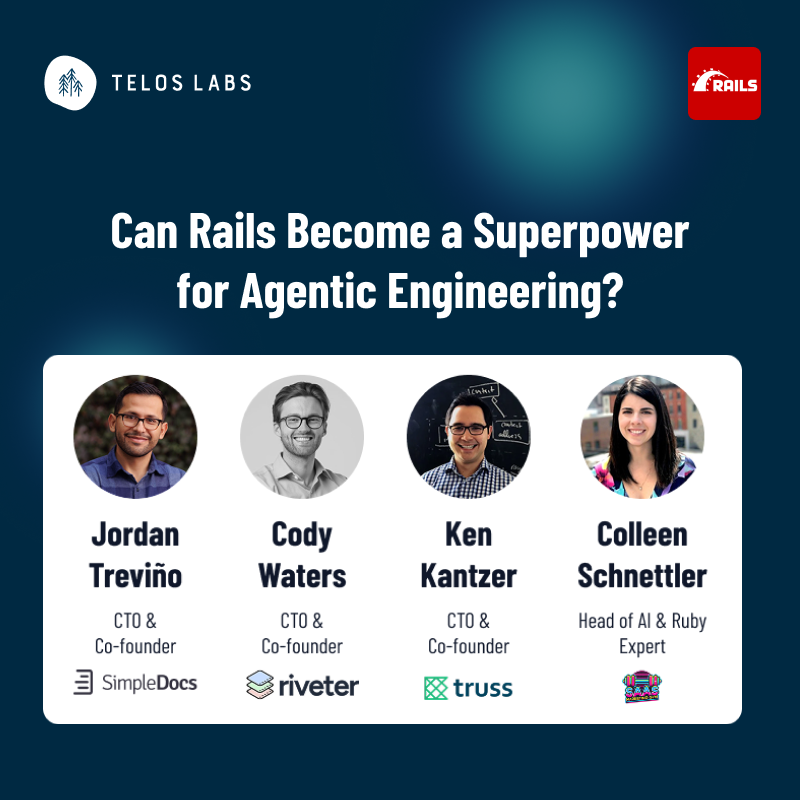
Can Rails become a superpower for agentic engineering?
How AI is changing software development, why planning matters more than coding, and where Rails fits in agentic engineering.
Mar 11, 2026